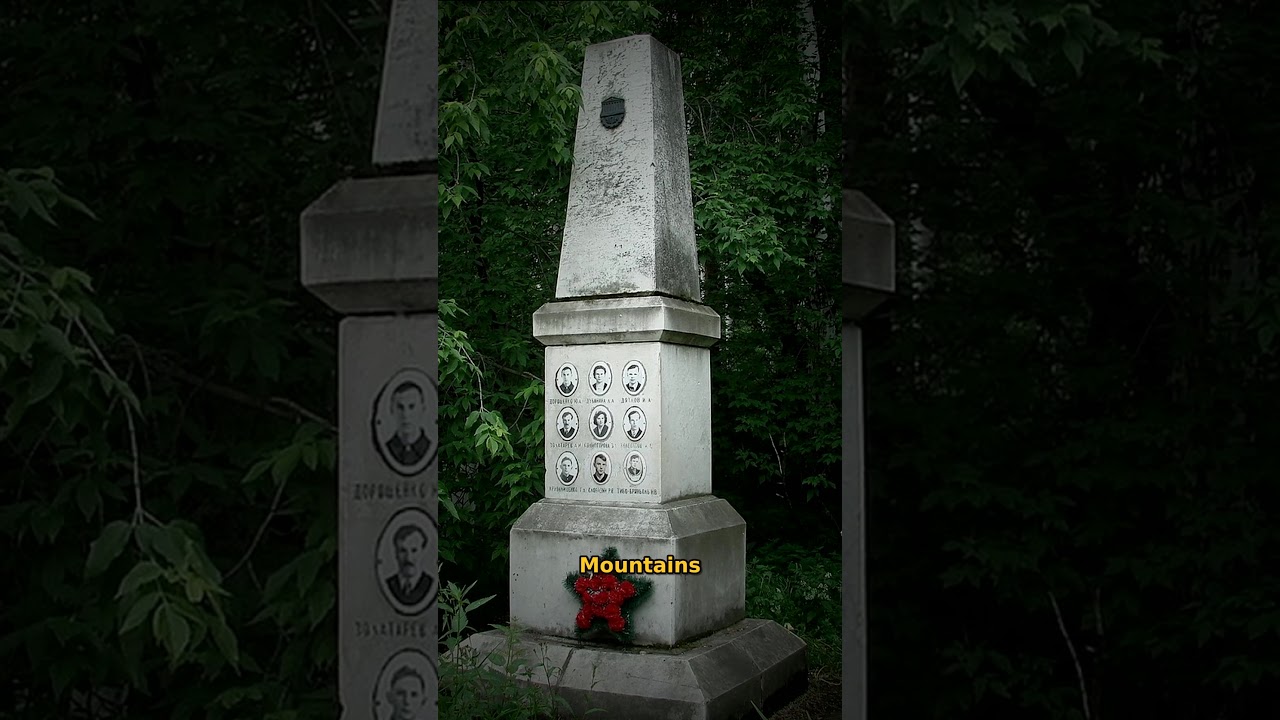
The Dyatlov Pass Incident: What Really Happened in the Ural Mountains?
Published · 13 views
In February 1959, nine experienced hikers died in the Soviet Ural Mountains under circumstances that still provoke debate today.
This documentary reconstructs the verified evidence, the search, the injuries, and the leading explanations — including the slab-avalanche theory — while separating documented facts from decades of speculation.
Watch the Short version: https://www.youtube.com/shorts/ESmSY3qxScc
Subscribe to Mystery Rush for carefully researched mysteries, unexplained events, and historical investigations.
Narration
Nine experienced hikers entered the frozen Ural Mountains in pursuit of adventure, but they never came home, leaving behind a mystery that defies logic.
It was February 1959. A group of young, skilled Soviet hikers set out on a challenging skiing expedition led by the experienced Igor Dyatlov.
They were prepared for the harsh conditions of the northern Ural Mountains, but no one could have prepared for what was waiting for them.
The expedition was supposed to be a triumph of endurance, but the silence from the mountains quickly turned into a desperate search.
As the days passed without word, rescuers began to realize that something had gone fundamentally wrong in the heart of the wilderness.
The search party eventually reached the campsite, but what they found was not just a tragedy; it was a scene of total confusion.
The tent itself had been slashed from the inside, as if the hikers were desperate to escape something within their own shelter.
This single piece of evidence set the stage for a decades-long investigation into one of the most baffling deaths in mountaineering history.
To understand the end, we must look at the beginning. The group was led by Igor Dyatlov, a man of skill and determination.
On January 28, 1959, the group was still intact. But one member, Yuri Yudin, was forced to turn back due to sudden illness.
Yudin was the only survivor. His departure left eight others to continue into the unknown, unaware that they were walking toward their fate.
The logs show they were experienced, capable of navigating the brutal Ural terrain. There was no sign of immediate danger in their journals.
But then, the campsite was abandoned. The evidence left behind was contradictory and deeply unsettling to the first responders.
Rescuers found footprints leading away from the tent toward the woods, but many of the hikers were barefoot or wearing only socks.
Some bodies were found under a large cedar tree, several meters away from the tent, stripped of their outer clothing.
The cause of death for some was simple: hypothermia. But for others, the medical findings were far more disturbing.
Two hikers showed signs of massive internal trauma—crushed ribs and skull fractures—without any external signs of struggle or impact.
It was as if they had been struck by a sudden, invisible force that crushed them from within.
As investigators dug deeper, they encountered a detail that added a layer of scientific mystery: radiation.
Soviet investigators reported elevated beta activity on some of the clothing samples found at the site.
Crucially, no one has conclusively identified the source of this radiation, leaving a massive question mark over the entire scene.
One theory suggests a secret military test or a falling rocket, but no evidence of such an event was ever found.
Another possibility is a rare phenomenon known as an infrasound-induced panic, where low-frequency sound causes intense dread.
Could the wind, moving through the specific shape of the mountain pass, have created a sound that drove them mad?
Then there is the theory of a slab avalanche—a sudden, localized slide of snow that could have crushed the tent.
Modern computer modeling has supported this, suggesting a small, unexpected avalanche could explain the injuries and the panic.
Yet, the avalanche theory struggles to explain why some hikers were found so far away, and why they were nearly naked.
The contradictions remain. The scientific explanations provide pieces of the puzzle, but they don't fit perfectly together.
Was it a natural disaster, a military secret, or something even more inexplicable that occurred on that frozen night?
For more than six decades, this case has been a magnet for conspiracy theorists and paranormal investigators alike.
The lack of a definitive answer allows the legend to grow, turning a tragic accident into a modern myth.
We must distinguish between what we know and what we fear. The evidence is cold, hard, and often contradictory.
We know nine people died. We know they were experienced. We know the location and the date.
But the 'why' remains locked away in the snow of the Ural Mountains, guarded by the wind and the cold.
Even with modern technology and advanced forensic science, some mysteries seem to resist being solved.
The Dyatlov Pass incident is a reminder that nature is far more unpredictable and terrifying than we often care to admit.
Is it possible that some secrets are meant to stay buried under the ice, forever out of human reach?
As we continue to search for answers, the mountain remains silent, offering only more questions to those who dare to ask.
The most haunting detail remains: the radiation. A trace of something unseen, in a place where nothing should have been.
What do you believe happened on that mountain? Was it nature, or something else? Let us know your theory in the comments. Subscribe and hit the bell for tomorrow's mystery.
Follow Mystery Rush for more mysteries.